
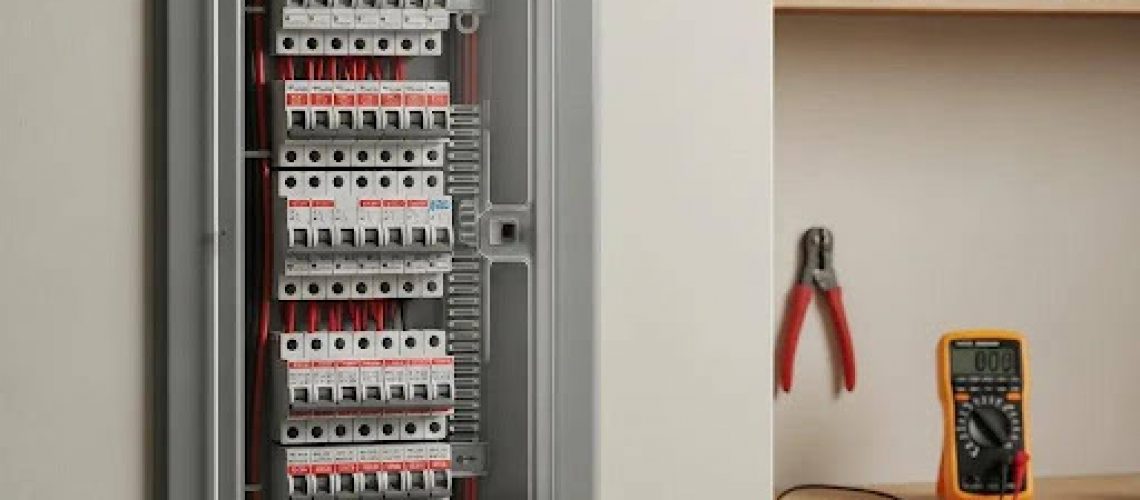
An electrical panel upgrade replaces or modernizes the central distribution point that supplies power across a property. In Chicago, upgrades improve safety, add capacity, and ensure your system meets local code for both homes and businesses. This guide explains how to spot when an upgrade is needed, what modern panels deliver, how your options compare, and the typical permitting and installation steps required by the city. Many older buildings still rely on fuse boxes or undersized 60–100‑amp services that can’t reliably support EV chargers, central air, or modern appliances. Knowing when to upgrade reduces fire risk and shortens downtime. After we walk through warning signs and technical options, we’ll explain why Flavin Electric is the trusted choice for on‑site evaluations—ready to schedule a site visit? [Request a Quote] Below, you’ll find the key warning signs, the permitting process, and why Chicago property owners rely on Flavin Electric for safe, code‑compliant upgrades.
Flavin Electric serves homeowners, property managers, and businesses across Chicago and surrounding areas — including Lincoln Park, Wicker Park, Logan Square, Evanston, Oak Park, Naperville, and Schaumburg. Whether you need a residential panel upgrade for your home or a commercial electrical service upgrade for your office, retail space, or multi-unit building, our licensed electricians deliver safe, code-compliant installations across the greater Chicago area. “At Flavin Electric, we’ve seen firsthand how these upgrades transform the safety and efficiency of Chicago’s unique housing stock. This guide has been curated by our team to provide you with the most accurate, localized information for your next project.”
What Are the Signs You Need an Electrical Panel Upgrade in Chicago?
Think about a panel upgrade if the existing service can’t meet demand, shows wear, or keeps tripping. Common causes include aging components that no longer function reliably, poor grounding or bonding that allows stray currents, and too‑small main ampacity that overloads when several modern appliances run together. Catching these issues early prevents overheating and arcing that can start fires and helps bring your system into compliance with the Chicago Electrical Code. Below are the most common, visible signs homeowners and facilities managers should watch for.
Watch for these common signs that an electrical panel likely needs an upgrade:
- Visible burn marks, charring, or melting on the panel or breaker housing — clear evidence of overheating or arcing.
- Frequent circuit breaker trips or blown fuses during normal use — a sign of insufficient capacity or failing protection devices.
- Flickering or dimming lights when large appliances start — indicating voltage drop or overloaded circuits.
- Presence of fuse boxes or very old panels (including legacy brands known for failures) instead of modern breakers — which limits protection and spare capacity.
- Too few outlets and regular use of extension cords or power strips for permanent loads — an unsafe workaround for missing circuits.
Use this checklist to decide whether to schedule a professional assessment. If you spot several of these signs, arrange an inspection to prevent escalation. The section below shows how to visually identify outdated panels and legacy components during a basic on‑site check.
How to Recognize Outdated Electrical Panels and Fuse Boxes

Outdated panels and fuse boxes are usually easy to spot on a quick visual check: screw‑in fuses, rust, faded or missing circuit labels, and older brand names tied to known safety problems. Legacy equipment often lacks AFCI and GFCI protection, may show corroded bus bars or loose knockouts, and frequently has little room for new circuits. If the panel cover has no accurate directory or the wiring looks brittle or cloth‑insulated, that strongly indicates the system is past its safe service life. The safest immediate action is to stop overloading circuits and schedule a licensed electrician for a load assessment and condition report; that inspection will identify operational issues and recommend whether replacement is necessary.
Industry guidance emphasizes that a thorough inspection of an existing electrical system is essential for planning upgrades and documenting compliance with the National Electrical Code.
Residential Electrical System Planning & NEC Compliance
This chapter offers general guidance for planning an electrical system for a new home or evaluating an existing one. It covers sizing and locating service equipment. For existing residences, a detailed inspection of the current electrical system and an inventory of loads are required. The specifications here are intended to meet the U.S. National Electric Code (NEC). The NEC’s purpose is to protect people and property from hazards related to electricity by establishing a minimum acceptable safety standard. A system that meets code should be essentially hazard‑free, though it may not be optimized for efficiency, convenience, or future expansion.
PLANNING THE RESIDENTIAL ELECTRICAL DISTRIBUTION SYSTEM, MT Morgan, 2004
Common Electrical Issues Indicating Panel Replacement Is Necessary
Persistent nuisance tripping, breaker faces that feel hot, buzzing or arcing noises, and recurring GFCI trips in wet areas all point to failing protective devices or overloaded bus assemblies. These problems get worse when high‑draw equipment is added — for example, EV chargers, heat pumps, or upgraded HVAC — because older services can’t handle higher simultaneous demand. Typical scenarios include a garage outlet that trips when an EV charger and compressor start together, or a kitchen circuit that trips when the microwave and dishwasher run at the same time. In those cases, adding circuits or increasing main service capacity is usually a safer, longer‑term fix than repeated repairs. Correcting these failures lowers fire risk and improves reliability. The section that follows covers the safety and code benefits of a full panel upgrade.
What Are the Benefits of Upgrading Your Electrical Panel in Chicago?
Upgrading your electrical panel boosts safety, adds modern protective features, and delivers the capacity needed for today’s appliances and EV charging — reducing fire risk and nuisance outages. Typical upgrades include modern breakers, correctly rated bus bars, and updated grounding and bonding so overcurrent protection works reliably and supports AFCI and GFCI devices. You also gain alignment with current NEC and Chicago code requirements, which simplifies inspections and can reassure insurance underwriters looking for evidence of reduced electrical risk. Beyond safety, upgrades let you add dedicated circuits for HVAC or EV chargers, eliminating unsafe temporary solutions like extension cords. The bullets below summarize the main safety and code improvements.
Upgrading a panel improves safety and code compliance in several direct ways:
- AFCI and GFCI Integration: Modern breakers mitigate arc‑fault and shock hazards and provide required protection for bedroom and wet‑area circuits.
- Improved Grounding and Bonding: Proper grounding and bonding limit stray voltages and ensure protective devices operate predictably.
- Correct Ampacity and Overcurrent Protection: Properly sized mains and breakers lower overheating risk and reduce the chance of cascading failures.
Together, these improvements reduce the likelihood of electrical fires, make it easier to pass municipal inspection, and create a safer environment for occupants while lowering long‑term liability. The next section explains how specific protective devices and code checkpoints function in practice.
How Electrical Panel Upgrades Improve Safety and Code Compliance
An upgrade lets you add AFCI and GFCI protection where required, actively reducing arc‑faults and ground‑fault shocks that older panels may miss. Work also includes correcting grounding and bonding to meet Chicago Electrical Code expectations, which stabilizes neutral‑to‑ground relationships and helps protective devices trip reliably under fault conditions. The permitting and inspection process enforces compliance by requiring load calculations, correct conductor sizing, and verified equipment ratings — and it produces documentation useful for insurance and resale. For example, replacing an old panel and adding AFCI protection to bedroom circuits can stop repeated nuisance arcing and secure municipal approval — a tangible safety improvement that delivers peace of mind.
Research supports the important role AFCI technology plays in preventing residential electrical fires and in meeting national code requirements.
AFCI Technology for Residential Fire Prevention
A newer generation of residential branch‑circuit breakers uses technology to detect and mitigate arcing faults. Studies of fire losses tied to electrical wiring and the development of the arc‑fault circuit interrupter for residential fire prevention are discussed. The voluntary industry standards for AFCIs and the National Electrical Code requirement adopted in 1999 are reviewed.
New technology for preventing residential electrical fires: Arc‑fault circuit interrupters (AFCIs), 2000
How Upgrades Increase Home Value and Support Modern Appliances
A modern, properly rated service supports appliances like EV chargers, central air, and high‑capacity kitchens — features buyers expect in the Chicago market and that can boost resale appeal. Market data show documented electrical upgrades can increase perceived value by several thousand dollars, since buyers factor in future renovation costs and inspection risk. Practically, a 200‑amp service gives the headroom to run multiple appliances at once without constant trips, removing the need to juggle loads and appealing to tech‑forward buyers and renters. Clear permit and inspection records also smooth real‑estate transactions and can ease underwriting with some insurers, reinforcing the investment value of a panel upgrade. Ready to improve your home’s safety and capacity? Flavin Electric’s licensed electricians are standing by for an on-site evaluation. Request a Quote
What Is the Difference Between 100‑Amp, 200‑Amp, and 400‑Amp Panels?
A 100‑amp panel typically covers basic household needs with limited simultaneous loads. A 200‑amp panel is the modern standard for single‑family homes running HVAC and EV chargers. A 400‑amp setup serves commercial sites or multi‑metered applications with large simultaneous demand. Higher amp ratings simply provide more available current at the bus, allowing extra circuits and higher continuous loads without overload. When adding EV chargers, multiple HVAC units, or heavy workshop equipment, designers commonly recommend at least a 200‑amp main for headroom and to avoid constant load shedding. If a load calculation reveals capacity shortfalls, upgrading to the appropriate ampacity prevents frequent trips and reduces reliance on temporary load management.
What to Expect During Your Panel Upgrade with Flavin Electric
Every panel upgrade project is handled differently based on the property’s unique requirements — steps, timeline, and scope all vary. Contact Flavin Electric for a personalized walkthrough of what your specific upgrade would involve.
How Long Does a Panel Upgrade Take?
Installation timelines differ from project to project based on scope, permitting, and site conditions. Reach out to Flavin Electric for a realistic timeframe specific to your upgrade.
What Does an Electrical Panel Upgrade Cost in Chicago?
Panel upgrade costs vary greatly depending on panel size, existing wiring conditions, permit requirements, and site complexity. Contact Flavin Electric for a free, itemized estimate tailored to your property.
How Do Residential, Commercial, and Industrial Panel Upgrades Differ?
Residential upgrades prioritize neat installation, space optimization, and the addition of AFCI/GFCI protection. Commercial and industrial upgrades often require higher ampacity, three‑phase distribution, selective coordination, and plans to minimize downtime. Businesses may need staged shutdowns, temporary power, and close coordination with inspectors and the utility for meter work, adding logistical complexity. Industrial sites can require protective relays, substation coordination, and heavier feeders sized for continuous loads, which extend planning and installation timelines. Understanding these scale differences helps owners anticipate permit complexity, inspection steps, and temporary power strategies during the upgrade.
What Factors Influence Panel Upgrade Pricing in Chicago?
Several variables determine the final price: required ampacity, the condition of existing wiring, whether the meter must be relocated or the service disconnect changed, permit fees, and site access complexity. For example, swapping a panel in a finished basement with easy meter access is faster and less expensive than upgrading a panel that requires meter relocation or remediation of knob‑and‑tube wiring, which can substantially raise labor and material costs. Commercial sites needing three‑phase equipment, selective coordination, or phased shutdowns also increase cost because of specialized labor and scheduling. These variables underscore why detailed, line‑item estimates are the best way to compare vendors and anticipate total project expense.
How Does Flavin Electric Provide Transparent Estimates?
Flavin Electric delivers itemized, written estimates that separate equipment, labor, permits, and potential remediation so clients can see exactly what they’re paying for and why. Estimates typically list recommended panel models, breaker counts, grounding upgrades, expected permit fees, and time estimates for installation and inspection. This transparency reduces surprises and helps keep projects on schedule. We discuss trade‑offs — for example, higher‑grade materials for longer warranties — and recommend a formal on‑site quote to validate scope and pricing. With that clarity, owners can compare proposals fairly and proceed with confidence knowing the estimate accounts for likely contingencies. Want an itemized estimate for your property? Schedule a free on-site assessment with Flavin Electric today. Request a Quote
Why Choose Flavin Electric for Your Electrical Panel Upgrade in Chicago?
Flavin Electric is a local, licensed electrical contractor serving Chicago with experience across residential, commercial, and industrial projects. Our team of trained, certified electricians delivers reliable workmanship. We prioritize safety and quality by specifying tested materials, tailoring solutions to client needs, offering transparent pricing, and standing behind our work with warranties — all crucial when safety and code compliance matter. For property owners seeking technical expertise and documented workmanship, Flavin Electric provides a structured process from assessment to inspection and an easy way to Request a Quote for an on‑site evaluation. The bullets below summarize why owners and managers choose a licensed, professionally trained contractor for panel upgrades.
- Trained Workforce: Our certified electricians complete apprenticeships and continuing education, delivering consistent, code‑compliant installations.
- Material and Workmanship Standards: We specify proven equipment and perform documented torque and test procedures to ensure reliability.
- Transparent Pricing and Warranty: Clear, itemized estimates and warranty coverage reduce long‑term risk and provide useful resale documentation.
With decades of experience navigating Chicago’s specific electrical codes and the complexities of local grid requirements, Scott Flavin ensures that every project handled by Flavin Electric meets the highest standards of safety and technical precision. This guide has been curated to help Chicago residents make informed decisions about their electrical infrastructure.
These advantages reduce inspection delays and create predictable outcomes for upgrades. The sections below expand on the specific benefits of professional certification and our quality practices.
What Are the Advantages of Our Certified Electricians?
Our certified electricians complete structured apprenticeships, continuing education, and field testing that reinforce safe installation practices and up‑to‑date code knowledge. This training helps technicians understand modern protective devices, proper grounding techniques, and the documentation inspectors expect in Chicago, improving first‑pass inspection rates and reducing rework. For owners, that means more reliable scheduling, fewer callbacks, and crews experienced with commercial coordination and high‑end residential finishes. Choosing professionally trained electricians increases confidence in workmanship and long‑term system reliability.
How Does Flavin Electric Ensure Quality, Safety, and Customer Satisfaction?
Our quality practices include specifying top‑grade materials, performing documented load calculations and torque testing, proactively coordinating permits and inspections, and delivering warranty documentation on completed work. Flavin Electric’s workflow emphasizes clear communication at every stage: a documented estimate, defined schedule windows, and a handoff package with inspection sign‑offs and warranty details. These steps reduce ambiguity, ensure compliance with Chicago permit requirements, and help owners plan around installation downtime — together improving overall satisfaction and occupant safety. Don’t wait for a tripped breaker or a failed inspection to act. Contact Flavin Electric for a professional panel assessment and transparent, code-compliant upgrade — serving Chicago homes and businesses. Request a Quote
Ready to upgrade? This guide was curated by Flavin Electric to help you make the best decision for your property. Contact us today for a consultation (312)-815-2855.